

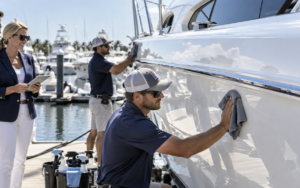
The marine industry has always been closely tied to recreation, tourism, manufacturing, coastal economies, and the broader outdoor lifestyle. Today, it is also supporting an increasingly diverse network of businesses built around maintaining the millions of vessels already on the water. From marinas and boatyards to detailing companies, parts suppliers, repair specialists, and surface-care manufacturers, the economic activity surrounding boat ownership extends far beyond the original purchase of a vessel. 🚤
That aftermarket economy matters. According to the National Marine Manufacturers Association, the U.S. recreational boating industry generates approximately $230 billion in annual economic impact and supports more than 36,000 businesses and over 812,000 jobs. In 2025 alone, U.S. recreational marine retail spending reached $54 billion, covering boats, engines, trailers, accessories, fuel, financing, insurance, docking, maintenance, and other boating-related expenditures.
Against that backdrop, products designed to maintain, restore, and protect boats are gaining greater commercial significance. What was once viewed primarily as routine seasonal maintenance is becoming part of a larger marine-care marketplace built around protecting valuable assets and extending their usable lives.
A Marine Economy That Extends Far Beyond New Boat Sales
One of the most important characteristics of the boating economy is that it does not depend solely on people purchasing new vessels. In fact, pre-owned boats accounted for nearly 80 percent of total boat unit sales in the United States during 2025, according to industry figures.
That creates a substantial installed base of vessels requiring regular care.
Every boat already on the water can generate years of spending on storage, fuel, insurance, mechanical repairs, replacement components, cleaning supplies, marina services, detailing, fiberglass restoration, and exterior protection. Older vessels may require even more attention as prolonged exposure to ultraviolet radiation, water, salt, humidity, pollutants, and changing weather conditions affect exterior finishes.
This is where marine surface maintenance becomes an important business category.
Industry observers watching broader economic patterns through outlets such as Reuters Business routinely track how manufacturing costs, consumer spending, energy prices, interest rates, and discretionary purchases affect American businesses. Those same economic pressures influence boating. When purchasing a new vessel becomes more expensive, maintaining an existing vessel can become a more attractive alternative for owners.
The result is a potentially durable market for companies selling products and services that help boaters preserve what they already own.
Boat Maintenance Is Becoming an Asset-Preservation Business
A recreational boat can represent a significant household investment. Even modest vessels involve purchase costs, registration, storage, transportation, fuel, insurance, equipment, and maintenance.
Owners therefore have a strong financial incentive to keep boats looking presentable and operating correctly.
Exterior condition is especially visible.
Fiberglass and gelcoat surfaces can lose their original shine after repeated environmental exposure. Oxidation may leave surfaces looking faded, dull, or chalky. As that deterioration becomes more noticeable, boat owners face a practical decision between living with the appearance, paying for professional correction, replacing components, or using maintenance and restoration products designed for marine surfaces.
That helps explain growing attention around specialized products such as Boat Polish, which sits within a much broader category of marine appearance and surface-care solutions.
The business opportunity is larger than the sale of a single container or treatment. Every purchase represents participation in an ongoing maintenance cycle. Boats remain exposed to the environment year after year, giving manufacturers and marine-care businesses opportunities to develop continuing customer relationships rather than depending entirely on one-time transactions.
The Aftermarket Has Become a Powerful Part of the Marine Industry
Aftermarket businesses often benefit from something manufacturers of large discretionary products cannot always count on: an existing customer base that already owns the underlying asset.
A marina does not need someone to purchase another boat before providing dockage. A mechanic does not require a customer to replace a vessel before servicing an engine. A detailing business can continue working on the same boat season after season.
Surface-care companies operate under a similar model.
The National Marine Manufacturers Association reported that aftermarket accessories alone represented $12.1 billion in spending during 2025. That figure illustrates the considerable economic activity taking place after boats leave dealerships.
Broader financial coverage from Bloomberg Markets regularly demonstrates how investors and business leaders look beyond headline sales figures to recurring revenue, replacement cycles, installed customer bases, and secondary markets. Those concepts apply particularly well to recreational boating.
A boat may change owners multiple times while remaining in service for decades. Each owner becomes another potential customer for repair, maintenance, storage, accessories, restoration, and appearance products.
For marine-care brands, longevity can be commercially valuable.
Used Boats Are Helping Support the Maintenance Economy
The dominance of pre-owned boat transactions is particularly important for maintenance-oriented businesses.
A used vessel may come with cosmetic wear, neglected finishes, minor damage, faded fiberglass, weather exposure, or years of accumulated deterioration. New owners frequently begin ownership by cleaning, repairing, upgrading, and restoring the vessel.
That creates an immediate aftermarket customer.
The process resembles what happens in automobiles, real estate, and other durable-goods markets. Buyers of existing assets often spend additional money after the initial transaction to improve condition and personalize the purchase.
Business publications such as Forbes Business cover industries ranging from manufacturing and retail to energy and enterprise growth, reflecting how economic activity often develops around both original products and the secondary services supporting them.
Marine businesses are no exception.
A healthy used-boat marketplace can support mechanics, upholstery companies, electronics installers, fiberglass specialists, mobile detailers, marina operators, marine retailers, and product manufacturers simultaneously.
That multiplier effect is one reason boating remains economically important even during periods when new vessel sales soften.
Industry Growth Does Not Always Mean More New Boats
The phrase growing industry can be misleading when interpreted only as increasing new-unit sales.
In reality, the marine economy can expand or remain economically significant even when new boat purchases slow.
NMMA reported that new boat retail unit sales declined 8.8 percent in 2025 compared with 2024. At the same time, the broader boating marketplace continued to benefit from steady participation and extensive spending on existing vessels.
That distinction matters.
A softer market for new boats may actually heighten the importance of maintenance because owners keep vessels longer. Rather than trading into newer models, consumers may invest in improving engines, interiors, electronics, fiberglass, gelcoat, and other components of boats they already own.
Business reporting from publications such as The Wall Street Journal frequently examines how companies adapt pricing and operating strategies when consumers face inflation, higher borrowing costs, and economic uncertainty.
Similar pressures exist within recreational boating. A consumer reluctant to finance a new vessel may still be willing to spend a comparatively modest amount maintaining an existing one.
That dynamic makes marine maintenance a noteworthy business sector in its own right.
Small Businesses Have an Especially Large Role
The recreational boating industry is also unusually connected to small business.
According to NMMA, approximately 93 percent of U.S. boat manufacturers are small businesses. Beyond manufacturing, countless independent operators provide detailing, repair, transportation, dock construction, marina services, fishing equipment, restoration, and maintenance.
This decentralized structure gives specialized marine products multiple routes to market.
Products can reach consumers through marine retailers, online stores, distributors, detailing businesses, repair shops, marinas, boat shows, manufacturers, and direct-to-consumer websites.
A professional detailer who finds an effective restoration or maintenance system may use it repeatedly across numerous vessels. A marina store can introduce a product to hundreds of boat owners. A consumer who successfully restores an aging vessel may continue purchasing maintenance products while recommending them to others.
Those relationships can create valuable word-of-mouth growth within tightly connected boating communities.
Coverage across Fortune Business News often highlights the importance of business models that combine specialized expertise with identifiable consumer communities. Marine care fits naturally into that pattern because boaters frequently exchange recommendations about maintenance techniques, products, marinas, mechanics, and service providers.
Florida Shows the Scale of the Opportunity
Geography also plays an important role in marine-related commerce.
Florida continues to lead the United States in recreational marine spending, according to NMMA data, followed by other major markets including Texas, Michigan, North Carolina, and New York.
These markets combine large boating populations with extensive networks of marinas, waterways, lakes, coastal communities, dealerships, repair facilities, and marine retailers.
Warm-weather states can create particularly active maintenance environments because boats may remain in use for longer portions of the year. Saltwater exposure, sunlight, humidity, and frequent use can place additional demands on exterior surfaces.
That turns routine maintenance into recurring commerce.
The opportunity is not restricted to luxury yachts. NMMA reports that 95 percent of boats in the United States are under 26 feet and towable. This means the customer base includes fishing-boat owners, family recreational boaters, watersports enthusiasts, and other mainstream consumers.
Marine maintenance is therefore not exclusively a premium-market business.
It is part of a broad recreational economy.
Appearance Has Real Economic Value
Marine maintenance is sometimes treated as purely cosmetic, but appearance can have financial consequences.
A well-maintained vessel can create a stronger impression when an owner eventually decides to sell or trade it. Buyers naturally evaluate visible signs of care when inspecting used boats. Faded fiberglass, heavy oxidation, neglected fittings, stained upholstery, and poorly maintained surfaces may suggest that other maintenance has also been postponed.
That gives exterior care a role in perceived value.
This principle appears throughout durable-goods markets. Condition influences buyer confidence.
Financial and market publications such as MarketWatch frequently examine how investor confidence and economic expectations shape decisions in financial markets. Consumer markets operate differently, but confidence remains important there as well. Buyers tend to respond more positively to assets that appear cared for.
For boat owners, keeping exterior surfaces in good condition can therefore serve two purposes. It supports pride of ownership while potentially helping protect resale appeal.
For businesses serving those owners, that creates a compelling value proposition centered on preservation rather than simple beautification.
Marine Companies Are Building Around Long-Term Ownership
The economics of boat ownership increasingly favor businesses capable of supporting customers over many years.
A vessel may require dozens of different products and services throughout its lifetime. Engines need service. Batteries eventually fail. Electronics become outdated. Upholstery wears. Covers deteriorate. Fiberglass ages. Hardware corrodes. Exterior finishes require attention.
Each need supports another portion of the marine economy.
The significance of this wider ecosystem becomes clearer when viewed through the lens of Wikipedia’s overview of business journalism, which describes business journalism as covering and interpreting commercial, economic, and financial activities across society. Recreational boating is a strong example of how an industry extends far beyond its most visible product.
The boat itself may be the centerpiece, but thousands of businesses earn revenue by keeping that boat usable, attractive, protected, and on the water.
Innovation Is Changing the Marine-Care Marketplace
Consumers also expect maintenance products to become easier to understand and more practical to use.
For manufacturers, that creates pressure to improve instructions, application systems, packaging, educational materials, and customer support. Digital commerce has expanded access as well, allowing specialized marine brands to reach boat owners without relying entirely on traditional brick-and-mortar distribution.
Online videos, owner communities, product demonstrations, before-and-after photography, and educational content have made restoration knowledge more accessible.
That accessibility can expand a market.
A project that once appeared complicated enough to require professional service may become approachable for a do-it-yourself boat owner after proper education. At the same time, professional detailing companies can adopt new products and processes that help them serve customers more efficiently.
The winners in this market are likely to be businesses that combine reliable products with credible information and realistic expectations.
Marine Maintenance Benefits From a Massive Outdoor Economy
Boating also sits inside a much larger outdoor recreation market.
NMMA, citing Bureau of Economic Analysis data, reports that outdoor recreation contributed more than $1.3 trillion to the U.S. economy and supported approximately 5.2 million jobs. Boating and fishing were the largest conventional outdoor-recreation activities by current-dollar value added.
That broader environment matters because participation creates downstream spending.
People who spend weekends fishing, cruising, waterskiing, visiting sandbars, traveling between marinas, or exploring waterways need equipment and services to support those activities.
Every additional season that a boat remains actively used extends the economic relationship surrounding it.
For maintenance businesses, the most valuable boat may not necessarily be the newest one. It may be the vessel whose owner intends to keep enjoying it for another five, ten, or fifteen years.
Conclusion
The marine industry is much larger than boat manufacturing and dealership sales. It is an interconnected economy of manufacturers, small businesses, retailers, marinas, service companies, repair specialists, accessory suppliers, restoration professionals, and millions of boat owners.
With U.S. recreational boating producing an estimated $230 billion in annual economic impact and marine retail expenditures totaling $54 billion in 2025, businesses supporting existing vessels occupy an important position in that ecosystem.
New boat sales may rise and fall with interest rates, consumer confidence, and broader economic conditions, but the enormous inventory of vessels already on American waterways continues to require care. As owners keep boats longer and the used-vessel market remains active, maintenance and restoration can become even more economically relevant.
The business boom surrounding marine care is ultimately being driven by a simple reality. Boats are valuable assets exposed to demanding environments, and owners want to keep them looking good and performing well for as long as possible.
That creates continuing opportunity for the companies capable of helping them do it. ⚓