

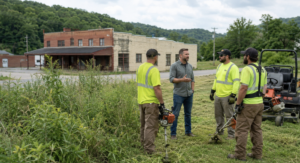
A large commercial property can be a tremendous asset. It gives a business room to expand, accommodate equipment, improve customer access, create outdoor amenities, or preserve valuable land for future use. However, acreage can quickly become a liability when vegetation is allowed to grow without a practical management plan.
In Richwood, where wooded hillsides, heavy seasonal growth, uneven terrain, and frequent rainfall shape the landscape, maintaining a large property requires more than occasionally cutting the grass. Brush, saplings, vines, weeds, fallen limbs, and invasive plants can spread across open ground before a property owner realizes how much usable space has been lost.
Professional vegetation management helps a business stay ahead of those problems. It protects access, improves appearance, supports safer operations, and keeps the property prepared for future opportunities. For Richwood business owners, managing the land should be viewed as part of managing the business. 🌿
A Business Property Communicates Before Anyone Enters the Building
Customers, vendors, employees, investors, and community partners form an impression of a business before they walk through the front door. They notice whether the entrance is visible, whether the parking area feels maintained, and whether the surrounding property looks organized.
When weeds cover signs, brush reaches the edge of a driveway, or uncontrolled vegetation surrounds outdoor equipment, the property can appear neglected even when the company itself is well managed. That impression matters in a community where local reputation and long-term relationships remain important.
The condition of commercial land can also affect how people perceive the surrounding area. Richwood has a long connection to forestry, industry, outdoor recreation, and Appalachian commerce. The city’s history, natural setting, and relationship with the nearby Monongahela National Forest are described in the Wikipedia overview of Richwood, West Virginia.
A professionally maintained property respects that setting while showing that the business is active, prepared, and invested in the community.
Overgrowth Rarely Becomes Less Expensive With Time
Small vegetation problems are usually easier to address than established ones. Young brush can be controlled before it develops thick stems and extensive root systems. Open ground can be maintained before saplings turn it into a dense wooded area. Access lanes can be cleared before branches and vines make them difficult to use.
Waiting often increases the scale of the work. What might have required routine mowing or brush cutting can eventually require forestry mulching, heavy equipment, tree removal, or repeated treatment. Dense vegetation can also conceal dumped materials, damaged fencing, washouts, drainage problems, and abandoned equipment.
For businesses that want to control long-term property expenses, scheduled maintenance is usually more predictable than emergency clearing. A recurring plan allows the property owner to prioritize the areas that matter most instead of paying to reclaim the entire site at once.
The West Virginia Division of Economic Development newsroom regularly reports on business investment, entrepreneurship, expansion, and economic development throughout the state. Recent initiatives have included new efforts to increase access to growth capital for West Virginia small businesses. Property readiness supports that same growth-minded approach. A business cannot use land effectively when the acreage has become inaccessible or overwhelmed by unmanaged vegetation.
Clear Land Supports Safer Daily Operations
Vegetation management is not only about appearance. It can directly affect how safely people move through a commercial property.
Employees may need access to utility boxes, storage areas, fence lines, drainage systems, service roads, ponds, pipelines, towers, or remote equipment. Emergency personnel may need to reach areas that are rarely used during normal operations. Contractors may need room to bring in machinery without hitting branches, hidden stumps, or deeply rutted ground.
Tall weeds and dense brush can hide holes, rocks, discarded wire, fallen branches, and uneven surfaces. Vegetation can also narrow sightlines near entrances and internal roadways. When drivers cannot see around a curve or employees cannot clearly identify the edge of a path, an ordinary trip across the property becomes more difficult.
Professional crews evaluate more than plant height. They consider slope, soil conditions, equipment access, obstacles, visibility, and the intended use of each section. That planning helps create a result that supports business operations rather than merely making the property look recently cut.
Companies following developments through West Virginia Business News see continued attention being given to rural investment, infrastructure, small-business growth, and regional development. Well-maintained commercial land contributes to those goals by keeping existing business properties functional and ready for productive use.
Professional Management Helps Preserve Valuable Acreage
Every acre does not need to look like a manicured lawn. In many cases, that would be impractical and unnecessarily expensive. Effective vegetation management divides the property into purposeful zones.
High-visibility areas near buildings, entrances, parking lots, and signage may require a polished appearance. Utility corridors and access routes need reliable clearance. Boundary lines may need to remain visible for inspections and security. Undeveloped sections can often retain a more natural character while still receiving enough attention to prevent unwanted brush from taking over.
This approach protects the value of the property without treating every section identically. It allows the business owner to spend money where maintenance provides the greatest operational benefit.
Companies preparing for professional Large Acreage Vegetation Management Richwood WV should begin by identifying how each area of the land is currently used and how it may be used in the future. That information helps the vegetation management provider recommend the appropriate equipment, clearing intensity, and maintenance frequency.
A thoughtful plan may include mowing, brush cutting, selective clearing, forestry mulching, fence-line maintenance, trail creation, access-lane restoration, or clearing around infrastructure. The goal is not simply to remove vegetation. It is to make the property work better for the business.
Drainage and Slopes Require Careful Attention
Richwood’s mountainous terrain makes water movement an important property-management concern. Vegetation can be beneficial when it stabilizes soil, but uncontrolled growth can also conceal blocked ditches, damaged culverts, eroded banks, and places where stormwater is no longer moving as intended.
Cutting everything without considering the slope can create new problems. Leaving everything untouched can allow debris and woody growth to obstruct drainage features. Professional management seeks a practical balance.
Crews should identify drainage channels before operating heavy machinery. They should also consider whether the ground is firm enough to support equipment without creating deep ruts. Sensitive areas may need selective clearing instead of aggressive removal.
This kind of planning is especially important for hotels, campgrounds, industrial properties, warehouses, utility sites, agricultural businesses, recreational facilities, and organizations with large outdoor areas. A visually improved property is helpful, but a stable and accessible property is far more valuable.
The West Virginia Chamber of Commerce Media Center reflects the broader conversation surrounding employers, regulation, infrastructure, workforce development, and the state’s business climate. Responsible land maintenance belongs in that conversation because physical property conditions influence operating costs, risk, accessibility, and expansion decisions.
The Right Equipment Produces a More Consistent Result
Large acreage cannot always be maintained effectively with residential lawn equipment. The terrain may be too rough, the vegetation may be too dense, and the work may cover too much ground.
Professional vegetation management companies use equipment selected for the specific conditions of the property. Depending on the site, that may include commercial mowers, brush cutters, skid-steer attachments, forestry mulchers, chainsaws, compact equipment, or machinery designed to operate on difficult ground.
Equipment selection matters because using a machine that is too small can waste time and produce uneven results. Using equipment that is unnecessarily large can disturb soil, damage desirable vegetation, or create access problems.
Experience matters as much as machinery. A skilled operator can distinguish between areas that require intensive clearing and areas that only need routine control. That judgment helps the business retain valuable trees, preserve natural buffers, and avoid damaging infrastructure hidden beneath the vegetation.
The West Virginia Small Business Development Center newsroom shares business resources, training opportunities, industry developments, and stories involving entrepreneurs throughout the state. Those resources reflect an important principle for business owners: professional support can help a company make better use of its time and assets. Outsourcing specialized acreage management allows employees to remain focused on the work they were hired to perform.
Maintained Acreage Creates Room for Business Growth
Commercial land often has value beyond its present use. A field may eventually become an equipment yard. An overgrown area could provide employee parking. A neglected access route might become a secondary entrance. Cleared acreage could support storage, events, recreation, landscaping, or a future building.
Those possibilities are harder to evaluate when the land cannot be walked, inspected, photographed, measured, or shown to potential partners. Vegetation management makes the acreage visible again.
It can also reveal the true condition of the property. Once brush is removed, the owner may discover usable level ground, existing drainage features, old foundations, fencing, trails, or areas requiring repair. That information supports more accurate planning.
West Virginia continues to promote rural business development and private investment. The USDA Rural Development West Virginia news releases have highlighted funding and investment intended to support rural businesses, infrastructure, food access, and economic activity throughout the state. Businesses that maintain their physical assets are better positioned to respond when financing, partnerships, grants, or expansion opportunities become available.
Recurring Maintenance Protects the Initial Investment
Clearing an overgrown property is an important first step, but it should not be the final step. Vegetation returns, especially in areas with long growing seasons and consistent moisture.
A maintenance schedule keeps the initial clearing from being lost. The frequency will depend on the type of vegetation, the intended appearance, terrain, weather, and how the land is used. High-visibility areas may need attention several times during the growing season. Remote sections may only require periodic cutting or inspection.
Documenting completed work can also help business owners plan budgets and compare changes over time. Photographs, maps, and maintenance notes provide a useful record of access lanes, fence lines, drainage areas, and sections where vegetation grows most aggressively.
Business owners can also follow regional growth and investment trends through West Virginia Executive’s Business News, which covers companies, leadership, development, and economic activity across the Mountain State. Staying informed about the regional economy is valuable, but businesses must also make sure their own properties are prepared to participate in that growth.
Choosing a Professional Vegetation Management Provider
A qualified provider should evaluate the property before recommending a plan. The evaluation should consider acreage, vegetation density, terrain, access points, buildings, utilities, fencing, water features, and the owner’s priorities.
The business owner should receive a clear explanation of what will be cut, what will remain, what equipment will be used, and how the finished property should look. Special concerns should be discussed before work begins. These may include preserving selected trees, protecting landscaping, avoiding wet ground, maintaining privacy buffers, or keeping operations open during the project.
Insurance, equipment condition, operator experience, and communication should also influence the decision. Large-property work can involve uneven ground, hidden obstacles, machinery, and changing site conditions. A professional company should approach those challenges with preparation rather than improvisation.
Price matters, but the least expensive estimate may not provide the best long-term value. Incomplete clearing, unsuitable equipment, soil damage, or poor communication can create additional work later. A dependable provider should help the business develop a practical strategy that fits the land and the budget.
Conclusion
Large commercial acreage should support a business, not quietly work against it. When vegetation is managed professionally, entrances remain visible, access routes stay open, employees can move more safely, and valuable land remains available for future plans.
For Richwood businesses, the surrounding landscape is part of the community’s identity and economic potential. Maintaining that land demonstrates pride, preparation, and responsible ownership. It also prevents manageable growth from turning into an expensive recovery project.
Professional large acreage vegetation management gives business owners greater control over their property. Instead of reacting after brush has blocked access or swallowed usable ground, they can follow a scheduled plan that protects appearance, function, and long-term value.
A well-maintained property sends a simple message to customers, employees, and community partners: this business is active, organized, and ready for what comes next. 🌳