

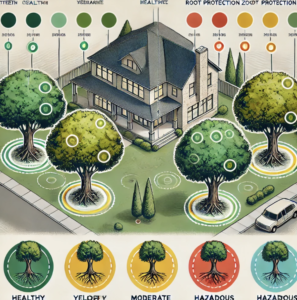
Starting an Arborist Report business is one of the smartest ways to turn tree knowledge into steady, high-value work. While removal and pruning can be seasonal, report writing can stay consistent year-round—because property owners, contractors, attorneys, HOAs, insurers, and municipalities all need clear documentation to make decisions.
An Arborist Report business isn’t “tree work.” It’s professional consulting. You’re selling clarity, risk reduction, and credibility—often in situations where someone needs to prove something, approve something, or protect something. If you set it up right, you can build a business that’s lighter on the body, stronger on margins, and easier to scale with systems.
To stay sharp as an owner, keep an eye on business and economic shifts that influence real estate, insurance, litigation, and municipal budgets. Reliable business news sources like Reuters Business, Financial Times (Companies), Bloomberg, The Wall Street Journal (Business), and The Economist (Business) can help you anticipate demand cycles. And if you want the broader mindset behind building something from scratch, Entrepreneurship (Wikipedia) is a solid overview of the fundamentals.
Step 1: Choose Your “Report Lane” and Get Specific
An Arborist Report business can mean several different services, and your fastest path to profit is choosing a clear lane first—then expanding.
Common arborist report types include:
-
Tree Risk Assessment reports (for safety concerns, public areas, schools, parks, commercial properties)
-
Tree Inventory reports (often for developments, campuses, HOAs, municipalities)
-
Construction impact / tree protection reports (for permitting and site work)
-
Tree value appraisal reports (for damage claims, disputes, removals, insurance situations)
-
Litigation support documentation (supporting attorneys with clear observations and conclusions)
Pick one or two to start, based on what your local market actually buys. A simple way to decide: choose the reports that solve expensive problems. When the stakes are high, budgets appear.
Step 2: Build Credibility Before You Build a Logo
Report buyers aren’t just looking for “someone who knows trees.” They want someone whose documentation holds up under scrutiny.
To compete in the report world, you’ll want to operate like a consultant:
-
Use consistent terminology and a repeatable structure
-
Keep your tone neutral, clear, and professional
-
Separate observations from recommendations
-
Document site conditions with strong photos and notes
-
Write like your report could be read by a building official, adjuster, or attorney—because it often will be
If you already have arborist experience, your next leap is not learning trees—it’s learning how to document trees in a way decision-makers trust.
Step 3: Make It Legal, Insurable, and Clean
Arborist Reports can influence liability decisions. That means you should treat your business like a professional practice, not a side hustle.
Your foundation should include:
-
A registered business entity (many choose an LLC; some prefer other structures depending on taxes and liability)
-
A dedicated business bank account
-
A clear service agreement / contract template
-
Professional liability coverage (Errors & Omissions is often discussed in consulting fields)
-
General liability coverage if you’ll be on job sites regularly
Your contract matters. It should clearly define scope, deliverables, turnaround time, limitations, and what the report can and cannot be used for. A strong agreement protects your time and prevents your work from being stretched beyond what was paid for.
Step 4: Set Up Your Tools and Your Workflow (This Is Where Profit Lives) 🧰
Most Arborist Report businesses don’t struggle because the owner lacks knowledge. They struggle because every report takes too long.
Build a workflow you can repeat:
-
Intake form (who, what, why, deadline, address, site access)
-
Site visit checklist (photos, measurements, notes, targets, defects)
-
Drafting process (template + standardized sections)
-
Quality review (typos, consistency, photo labels, clarity)
-
Delivery (PDF export, naming conventions, invoice follow-up)
Tools that often help (choose what fits your style and budget):
-
A strong report template (the real money-maker)
-
Cloud storage and file naming systems
-
Photo organization process (folders by date and site)
-
A tablet or laptop for field notes
-
Scheduling + invoicing software
Your goal is simple: reduce decision fatigue. The easier your process is, the more reports you can complete without burning out.
Step 5: Price Like a Consultant, Not a Tree Crew
If you price reports like “just another service,” you’ll end up overworking and under-earning. Reports are specialized deliverables with professional responsibility behind them.
Most profitable arborist report businesses price based on:
-
Complexity (simple residential vs. multi-acre development)
-
Number of trees / scope size
-
Turnaround time (standard vs. rush)
-
Intended use (personal planning vs. permitting vs. dispute)
-
Add-ons (inventory tables, maps, tagged photos, appendices)
A practical approach is to build 3 tiers:
-
Basic Report: limited scope, one property area, standard photos, concise recommendations
-
Standard Report: more detail, clearer structure, better documentation, stronger deliverables
-
Premium / Permitting / Development Package: inventory tables, tree protection notes, construction impact detail, higher complexity
This gives buyers choices, protects your time, and raises your average ticket naturally.
Step 6: Build a Client Pipeline That Feeds Itself
Arborist report clients often come in clusters. When you win one relationship, it can become recurring work.
High-value referral sources include:
-
Attorneys (property disputes, damage claims, liability matters)
-
Insurance adjusters and restoration companies
-
Home inspectors and structural engineers
-
HOAs and property managers
-
Builders, developers, and civil engineers
-
Municipal permitting offices (not as clients—but as the place where requirements drive demand)
Your marketing doesn’t need to be loud. It needs to be specific and trust-building:
-
A simple website page for each report type you offer
-
A sample report excerpt (redacted) that shows structure and clarity
-
A short “What you get / What it’s used for” explanation
-
Local SEO targeting phrases like “tree risk assessment report” + your city
-
Relationship outreach to the professionals above
When people are under pressure—permit deadlines, disputes, safety concerns—they don’t want to “shop around.” They want the person who seems prepared.
Step 7: Deliver Reports That Make You the Obvious Choice
A great arborist report is easy to read, hard to misinterpret, and organized so a busy person can skim it quickly.
Strong reports typically include:
-
Executive summary (what matters most, up top)
-
Purpose and scope (why the report exists and what’s included)
-
Site conditions (what you observed)
-
Tree details (as needed—species, size, condition indicators)
-
Risk considerations (if applicable)
-
Recommendations (clear, prioritized, practical)
-
Photos (labeled, relevant, not bloated)
-
Limitations and assumptions (protective language, professional boundaries)
When your reports consistently look polished and confident, your price stops being the main topic—because your work feels like a safe decision.
Step 8: Create Systems to Scale Without Working Nights
Once you’re producing reports consistently, scaling becomes a systems game:
-
Template library (different templates for different use cases)
-
Repeatable field process (same photos, same angles, same documentation routine)
-
Admin automation (scheduling, invoicing, reminders)
-
Turnaround standards (so clients trust your timing)
-
Optional subcontract support (photography help, data entry help, formatting help)
You don’t have to hire an entire team to scale. You can scale with structure first—then add support where it removes the most friction.
Conclusion: Build the Business That Your Body Can Sustain 🌿💼
An Arborist Report business is a powerful shift from labor-heavy work to expertise-driven work. You’re not selling tree trimming—you’re selling documentation that helps people make decisions, reduce risk, resolve conflict, and move projects forward.
Start by choosing a report lane, building a repeatable workflow, pricing like a consultant, and marketing through trust-based relationships. Keep your operation clean and professional, and your reports will become your reputation—quietly opening doors to better clients, higher fees, and more consistent work.
When you do it right, the business grows not because you work harder—but because your process gets sharper, your deliverable gets stronger, and your name becomes the obvious choice. ✅