

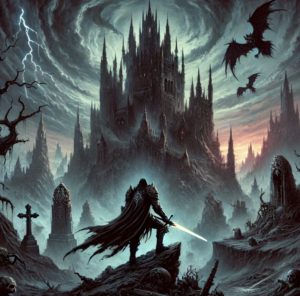
Launching a dark medieval fantasy novel is not just an artistic milestone. It can be the foundation of a legitimate business that grows in value over time, especially when the author treats the book like an asset and the audience like a community. The world has changed for creators. Distribution is wider, marketing channels are more direct, and readers are actively hunting for immersive stories that feel like a refuge from bland, predictable entertainment.
A dark medieval fantasy author has something especially valuable: a genre that thrives on depth, lore, and obsession. The very elements that make the book compelling are also the same elements that make the business model stronger, because readers who fall in love with a grim, myth-soaked world tend to stay, collect, recommend, and return for more. That is not a hobby. That is a market.
A Dark Medieval Fantasy Book Is a Sellable Product, Not Just a Story
A book is one of the few creative products that can be produced once and sold repeatedly without running out of inventory. Even when print is involved, modern print-on-demand models allow authors to sell physical copies without warehouses or massive upfront costs, which shifts the author from “hope it works” to “build it smart.”
This matters because a dark medieval fantasy novel is not usually a one-and-done purchase for the right reader. These readers often buy in formats, not just titles. They want an eBook for convenience, a paperback for travel, and a hardcover for the shelf. They also buy companion items when the world is rich enough, because the story feels like a place they want to keep. That is why the author can think like an entrepreneur while still protecting the soul of the art.
And because self-publishing and indie publishing infrastructure has expanded dramatically over time, the path to market is far more open than it used to be. Amazon’s Kindle Direct Publishing is a clear example of how authors can publish and sell globally while controlling key decisions like pricing and rights.
The Market Rewards Author-Entrepreneurs Who Treat Publishing Like a Business
There is a difference between “writing a book” and “building a publishing business.” The second approach is where real leverage lives. When an author tracks sales, optimizes descriptions, tests covers, builds an email list, and steadily releases new work, the book becomes the first product in a growing catalog.
This shift is not theory. Major business publications have been describing the broader trend of creators becoming entrepreneurs for years, because the economics increasingly favor direct relationships with audiences. The creator economy is built around bypassing traditional gatekeepers and building sustainable income from attention, trust, and repeat purchases.
In practice, that means an author can build a system where each new reader becomes a long-term customer. One book leads to the next. One satisfied buyer leads to word-of-mouth. One series creates demand for pre-orders, special editions, and spin-offs. The author is no longer just selling a single novel. He is selling a world.
Direct-to-Reader Sales Turn a Fanbase Into a Predictable Revenue Engine
For a dark medieval fantasy author, the strongest long-term advantage is the ability to sell directly to readers. Direct sales allow better margins, better data, and a stronger relationship with the audience. When readers buy from the author’s own storefront, the author is not merely renting visibility on a platform. He is building an owned customer base.
This is why more publishers and media strategists have pushed the idea of direct-to-customer models, because they improve resilience and reduce dependence on any single marketplace.
Dark medieval fantasy fits direct sales beautifully. The genre thrives on collectors and devoted fans. Signed copies, limited runs, “forbidden chronicle” bundles, map prints, lore booklets, and premium hardcovers can turn one story into a higher-value offering, without needing to dilute the tone or brighten the darkness. The author simply packages the experience.
Social Discovery Has Become a Business Channel, Not a Lucky Break
For years, authors dreamed of getting discovered. Now discovery is engineered. Social platforms and reader communities can create demand quickly, especially for genre fiction with strong aesthetics. Dark medieval fantasy has a built-in visual identity. Cloaks, sigils, ruins, candles, steel, ravens, stained parchment vibes. That is marketing fuel.
Business media has covered how platforms like TikTok, including BookTok, influence sales and publishing strategies because viral reader behavior has real financial impact.
An author who understands this does not need to become an influencer caricature. He can simply show the work. Share worldbuilding snippets. Post short readings. Reveal character art. Talk about inspirations. Showcase the craft behind the darkness. Each piece of content becomes an on-ramp to the product.
Owning the Intellectual Property Creates Long-Term Upside
A dark medieval fantasy novel is not just a book. It is intellectual property, and IP is how creative businesses scale. When the author owns the rights, he can expand into audiobooks, translations, adaptations, games, merchandise, and collaborations. Some of these will never happen, and that is fine. The point is that the author has optionality.
This is one of the reasons self-publishing has remained so attractive. It gives creators a route to market while maintaining ownership, which can matter more than a single advance when the work becomes a durable brand. Reuters has long highlighted how self-publishing expanded access and output, even while noting that success requires serious business effort.
A dark medieval fantasy author can build a “story company” where the book is the flagship product and everything else is an extension of the world. That is how a lone writer turns into a small media enterprise over time.
The Economics of Digital Publishing Favor Backlists and Series
One of the most underrated business advantages for authors is the backlist effect. When a new book releases, earlier books sell again. When a series gains traction, every volume becomes more valuable. This compounding effect is especially strong in fantasy, where readers often binge and collect.
Publishing trade coverage continues to show how self-publishing output and influence have grown, reflecting the reality that indie authors can drive meaningful volume and shape trends.
A dark medieval fantasy author can lean into this by building a catalog strategy. One standalone novel can sell. A connected universe can sell for years. A trilogy can become a reliable engine. A long-running saga can become a career.
Modern Tools Make It Easier to Operate Like a Business, Even as a Solo Creator
A business needs systems. Today, authors have access to tools for payments, storefronts, email marketing, print-on-demand, audiobook distribution, ad platforms, and analytics. That lowers the barrier to entry and increases the ability to iterate.
There are also new realities in the market, including discussions about AI in publishing and the flood of low-quality content. Reuters reported on how the launch of ChatGPT contributed to a boom in AI-written e-books on Amazon, which pushed platforms and publishers to grapple with quality and trust.
For a serious author, this environment can actually be an advantage. When noise increases, craftsmanship stands out. A well-written, emotionally gripping dark medieval fantasy book with consistent branding becomes a signal of quality. The author can position himself as the real thing by focusing on reader experience, editing, presentation, and community.
This Is a Recognized Industry, With Clear Definitions and Proven Paths
A common mental hurdle for authors is the belief that selling books is not “a real business.” That idea collapses under even minimal scrutiny. Publishing is a global industry. Self-publishing is a recognized model with established definitions, infrastructure, and economics. Even a basic reference point makes that clear. 📌 Self-publishing
Once the author accepts that he is operating a business, his decisions improve. He chooses a clear brand promise. He builds a release schedule. He tracks conversion points. He invests in editing and cover design like a manufacturer invests in quality control. He treats marketing as distribution, not desperation.
Conclusion: A Dark Medieval Fantasy Author Can Build More Than a Book, He Can Build an Empire 🏰🔥
A dark medieval fantasy book is a powerful starting point because the genre naturally supports world-building, loyalty, collecting, and long-term series consumption. Modern publishing platforms make distribution accessible, direct-to-reader models increase profitability and resilience, and social discovery creates real commercial momentum.
The author who embraces the business side does not become less creative. He becomes more free. He stops begging for permission and starts building assets. He stops hoping readers will appear and starts creating reliable paths for them to find the work. And over time, one book can become a catalog, a brand, a community, and a living business built from a dark and beautiful world that readers are proud to carry with them.